
20-Minute Strength Training Routines for Women Over 40: Your Complete Guide to Building Muscle and Confidence
Table of Contents
1. Introduction: Why Strength Training Matters After 40
2. The Science Behind Strength Training for Women Over 40
3. Essential Equipment for Your Home Workouts
4. 20-Minute Full Body Strength Routine
5. Upper Body Focus Workout
6. Lower Body Power Session
7. Core and Stability Training
8. Safety Tips and Modifications
9. Creating Your Weekly Schedule
10. Tracking Progress and Staying Motivated
11. Frequently Asked Questions
12. Conclusion
Introduction: Why Strength Training Matters After 40
Let me tell you something that might surprise you: turning 40 doesn’t mean your strongest days are behind you. In fact, it’s quite the opposite. As a fitness enthusiast who discovered the transformative power of strength training in my forties, I can confidently say that this decade can be your most empowering yet.

After 40, our bodies begin experiencing natural changes. Muscle mass starts declining by approximately 3-8% per decade, bone density decreases, and metabolism slows down. But here’s the good news: strength training can not only halt these changes but actually reverse many of them. The best part? You don’t need hours at the gym or expensive equipment to see remarkable results.
This comprehensive guide will walk you through effective 20-minute strength training routines specifically designed for women over 40. These workouts respect your busy schedule while delivering maximum results for building lean muscle, boosting metabolism, and enhancing overall quality of life.
The Science Behind Strength Training for Women Over 40
Research consistently shows that strength training provides unique benefits for women in their forties and beyond. A study published in the Journal of Applied Physiology found that women who engaged in regular resistance training maintained significantly more muscle mass and bone density compared to their sedentary counterparts.
When we lift weights or perform resistance exercises, we create microscopic tears in our muscle fibers. As these tears repair, our muscles become stronger and more defined. This process, called muscle protein synthesis, remains highly effective throughout our forties and beyond, especially when combined with adequate protein intake.
Strength training also triggers the release of growth hormone and increases insulin sensitivity, both crucial for maintaining a healthy metabolism. Additionally, the confidence boost from feeling physically strong often translates into other areas of life, creating a positive ripple effect that extends far beyond the workout itself.
Essential Equipment for Your Home Workouts
One of the beauties of effective strength training is that you don’t need a gym membership or expensive equipment. Here’s what I recommend for creating your home strength training setup:
A set of adjustable dumbbells ranging from 5 to 25 pounds provides versatility for different exercises and progression levels. Resistance bands offer variable resistance and take up minimal storage space. A yoga mat creates a comfortable surface for floor exercises and stretching.
Optional additions include a stability ball for core work and a step or sturdy bench for elevated exercises. Many exercises can also be performed using just your body weight, making strength training accessible regardless of your equipment budget.
20-Minute Full Body Strength Routine
This comprehensive routine targets all major muscle groups in just 20 minutes. Perform each exercise for 45 seconds, followed by 15 seconds of rest. Complete three rounds total.
Begin with bodyweight squats, focusing on proper form by keeping your chest up and weight in your heels. Follow with modified push-ups, either on your knees or against a wall, depending on your current strength level. The key is maintaining proper alignment from head to toe.
Move into bent-over dumbbell rows, which strengthen your back and improve posture. Keep your core engaged and pull your shoulder blades together as you lift the weights. Transition to overhead shoulder presses, starting with lighter weights and focusing on controlled movement.
Include glute bridges to target your posterior chain, squeezing your glutes at the top of each repetition. Finish with a plank hold, building core stability that supports all other movements. Remember, quality always trumps quantity in strength training.
Upper Body Focus Workout
This targeted routine emphasizes building strength in your arms, shoulders, chest, and back. The beauty of upper body strength training is how quickly you’ll notice improvements in daily activities like carrying groceries or lifting objects overhead.
Start with chest presses using dumbbells while lying on your back. This exercise builds pushing strength and targets your chest, shoulders, and triceps simultaneously. Follow with bicep curls, focusing on slow, controlled movements rather than swinging the weights.
Incorporate tricep dips using a sturdy chair or step. These effectively target the back of your arms while also engaging your core for stability. Add lateral raises to strengthen your shoulders and create that coveted shoulder definition.
Include reverse flies to counteract forward posture from daily activities like computer work. This exercise strengthens your rear deltoids and upper back muscles. Finish with wall sits combined with arm circles to challenge both your lower body endurance and shoulder stability.
Lower Body Power Session
Your legs house your body’s largest muscle groups, making lower body training incredibly effective for building overall strength and boosting metabolism. This routine focuses on functional movements that translate directly to daily activities.
Begin with goblet squats, holding a dumbbell at chest level. This variation helps maintain proper posture while adding resistance to the movement. Progress to alternating lunges, which challenge your balance while building unilateral strength.
Include single-leg deadlifts to target your hamstrings and glutes while improving balance and coordination. Start without weights and add resistance as your balance improves. Calf raises strengthen your lower legs and improve ankle stability.
Add step-ups using a sturdy platform or step. This functional exercise mimics climbing stairs while building power in your legs and glutes. Conclude with wall sits to build muscular endurance in your quadriceps and glutes.
Core and Stability Training
A strong core serves as the foundation for all movement and becomes increasingly important as we age. This focused routine targets not just your abdominal muscles but your entire core system, including your back and hip stabilizers.
Start with dead bugs, lying on your back and alternating opposite arm and leg movements. This exercise teaches core stability while moving your limbs independently. Progress to bird dogs, performed on hands and knees, extending opposite arm and leg while maintaining a neutral spine.
Include side planks to target your obliques and lateral core stability. Modify by dropping to your knees if needed, focusing on maintaining a straight line from head to toe. Add Russian twists with or without weight to challenge rotational stability.
Incorporate mountain climbers for a dynamic core challenge that also elevates your heart rate. Finish with a traditional plank hold, building isometric strength throughout your entire core system.
Safety Tips and Modifications
Safety should always be your top priority when strength training, especially as our bodies require more recovery time and careful attention to form. Always begin with a five-minute warm-up including light cardio and dynamic stretching to prepare your muscles and joints.
Focus on mastering proper form before increasing weight or intensity. It’s better to perform fewer repetitions with excellent form than many repetitions with poor technique. Listen to your body and don’t hesitate to modify exercises based on any physical limitations or discomfort.
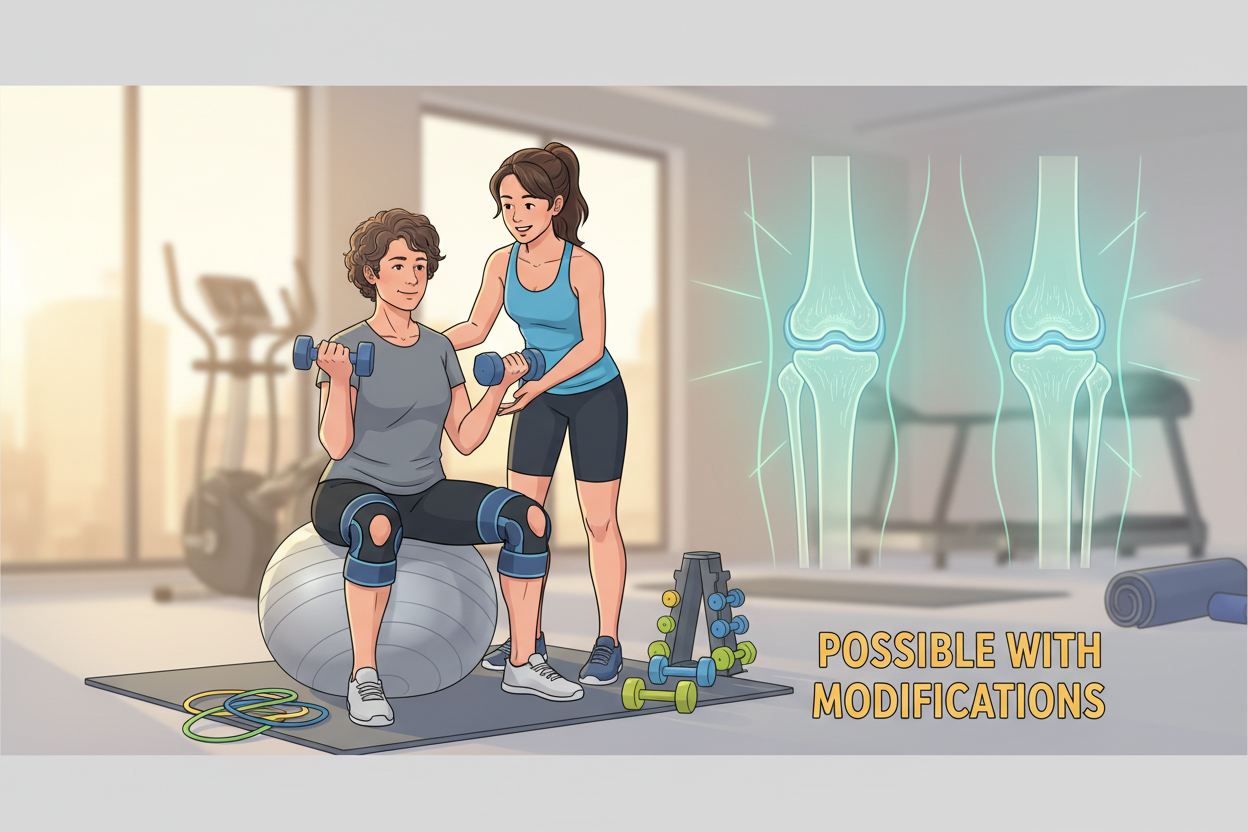
If you have joint issues, consider low-impact modifications such as seated exercises or using resistance bands instead of free weights. For those with back concerns, avoid overhead movements initially and focus on exercises that maintain a neutral spine position.
Always cool down with gentle stretching, holding each stretch for 15-30 seconds. This helps maintain flexibility and reduces muscle soreness. Stay hydrated throughout your workout and allow at least 48 hours between training the same muscle groups.
Creating Your Weekly Schedule
Consistency trumps intensity when it comes to long-term success in strength training. I recommend starting with three 20-minute sessions per week, allowing at least one day of rest between workouts for optimal recovery.
A sample weekly schedule might include full body workouts on Monday, Wednesday, and Friday, with active recovery activities like walking or gentle yoga on Tuesday and Thursday. Weekends can be reserved for longer activities you enjoy, such as hiking or recreational sports.
As you build strength and confidence, you can progress to four sessions per week, alternating between upper body, lower body, and full body routines. Remember that rest days are just as important as workout days for muscle growth and recovery.
Track your workouts in a simple journal or smartphone app, noting the exercises performed, weights used, and how you felt during the session. This information becomes invaluable for monitoring progress and making appropriate adjustments to your routine.
Tracking Progress and Staying Motivated
Progress in strength training extends far beyond the number on a scale. Focus on functional improvements like carrying groceries with ease, climbing stairs without breathlessness, or simply feeling more confident in your physical capabilities.
Take body measurements monthly rather than weighing yourself daily, as muscle tissue is denser than fat tissue. Progress photos can also reveal changes that measurements might miss, particularly improvements in posture and muscle definition.
Celebrate small victories along the way, whether it’s completing your first full push-up, increasing your dumbbell weight, or simply maintaining consistency for a full month. These achievements build momentum and reinforce the positive habit you’re creating.
Find an accountability partner or join online communities of women with similar fitness goals. Sharing your journey with others provides motivation, support, and valuable tips from those who understand your challenges and celebrate your successes.
Frequently Asked Questions
Q: Will strength training make me bulky?
A: This is one of the most common misconceptions about strength training for women. Due to lower testosterone levels, women typically develop lean, toned muscle rather than bulk. Strength training actually creates a more sculpted, defined appearance while boosting metabolism.
Q: How quickly will I see results?
A: You may notice improvements in strength and energy within 2-3 weeks. Visible muscle changes typically appear after 6-8 weeks of consistent training. Remember that everyone progresses at different rates, so focus on how you feel rather than comparing yourself to others.
Q: Can I do strength training if I have joint problems?
A: Absolutely, but modifications may be necessary. Strength training can actually improve joint stability and reduce pain when performed correctly. Consult with a healthcare provider or certified trainer to develop a safe program tailored to your specific needs.
Q: What should I eat before and after workouts?
A: Eat a light snack containing both carbohydrates and protein 30-60 minutes before exercising. Post-workout, consume protein within 30 minutes to support muscle recovery. Simple options include Greek yogurt with berries or a protein smoothie.
Q: Is 20 minutes really enough for an effective workout?
A: Yes, when structured properly and performed with intensity. High-quality, focused training sessions can be more effective than longer, less intensive workouts. The key is maximizing your effort during those 20 minutes.
Q: Should I do cardio and strength training on the same day?
A: You can combine both, but prioritize strength training when your energy is highest. If doing both in one session, perform strength training first, followed by 10-15 minutes of moderate cardio.
Conclusion
Embarking on a strength training journey after 40 is one of the most empowering decisions you can make for your health, confidence, and overall quality of life. These 20-minute routines prove that effective fitness doesn’t require hours of your day or expensive gym memberships.
Remember that every expert was once a beginner. Start where you are, use what you have, and do what you can. Your future self will thank you for taking this important step toward building strength, confidence, and vitality that will serve you for decades to come.
The most important workout is your next one. Whether you’re just beginning or returning to fitness after a break, these routines provide a solid foundation for building the strong, capable body you deserve. Embrace the journey, celebrate small victories, and remember that consistency, not perfection, is the key to long-term success.
Your forties can truly be your strongest decade yet. The only question remaining is: when will you start?