Seasonal Vegetables That Support Women’s Bone Health: A Year-Round Guide to Stronger Bones
Table of Contents
1. Introduction: Why Women’s Bone Health Matters
2. The Connection Between Seasonal Vegetables and Bone Health
3. Spring Vegetables for Bone Strength
4. Summer Vegetables That Build Stronger Bones
5. Fall Vegetables for Optimal Bone Health
6. Winter Vegetables to Support Your Skeletal System
7. Key Nutrients in Vegetables That Promote Bone Health
8. How to Incorporate Seasonal Vegetables into Your Daily Diet
9. Conclusion: Building a Foundation for Lifelong Bone Health
10. Frequently Asked Questions
Introduction: Why Women’s Bone Health Matters
As a woman, you’ve probably heard countless times about the importance of calcium for your bones. But here’s something that might surprise you: the secret to maintaining strong, healthy bones throughout your life isn’t just about popping calcium supplements. It’s about embracing the natural bounty that each season brings to your plate.
Women face unique challenges when it comes to bone health. After menopause, estrogen levels drop dramatically, leading to accelerated bone loss. In fact, women can lose up to 20% of their bone density in the five to seven years following menopause. This makes it crucial to build and maintain strong bones throughout our lives, not just when we’re older.
The good news? Nature has provided us with an incredible pharmacy of seasonal vegetables that can support our bone health in ways that go far beyond what any single supplement can offer. These vegetables don’t just provide calcium – they deliver a complex array of nutrients that work together to build stronger bones, reduce inflammation, and support overall skeletal health.
The Connection Between Seasonal Vegetables and Bone Health
When we think about eating seasonally, we often focus on taste, freshness, and environmental benefits. But there’s another compelling reason to align your diet with nature’s calendar: seasonal vegetables are naturally designed to provide the nutrients our bodies need at specific times of the year.
Seasonal vegetables are harvested at their peak nutritional value, which means they contain higher concentrations of vitamins, minerals, and phytonutrients compared to their out-of-season counterparts. These nutrients work synergistically to support bone health in multiple ways – from providing the building blocks for bone tissue to supporting the complex hormonal and metabolic processes that regulate bone formation and breakdown.
Moreover, eating seasonally ensures dietary variety throughout the year, which is essential for obtaining the full spectrum of nutrients needed for optimal bone health. Each season brings its own unique nutritional profile, creating a natural rotation that prevents nutrient deficiencies and supports long-term health.
Spring Vegetables for Bone Strength
Spring arrives with a burst of fresh, tender vegetables that are perfect for supporting your body’s natural renewal processes. After a long winter, these early vegetables provide essential nutrients that help kickstart your bone health journey for the year.
Asparagus stands out as a spring superstar for bone health. These slender green spears are rich in vitamin K, which plays a crucial role in bone metabolism by helping to activate proteins that bind calcium to bones. A single cup of asparagus provides about 70% of your daily vitamin K needs. Asparagus also contains folate, which supports the production of collagen – a protein that forms the flexible framework of bones.
Spring onions and garlic scapes deserve special mention for their bone-protective compounds. These allium family members contain prebiotic fibers that support gut health, which is increasingly recognized as vital for calcium absorption. They also provide sulfur compounds that may help reduce bone loss by supporting the body’s natural detoxification processes.
Don’t overlook spring greens like arugula, spinach, and early lettuce varieties. These leafy vegetables are nutritional powerhouses, providing not only calcium but also magnesium, which is essential for converting vitamin D into its active form. Magnesium also helps regulate calcium metabolism, ensuring that this vital mineral gets deposited in bones rather than soft tissues.
Summer Vegetables That Build Stronger Bones
Summer’s abundance brings us vibrant, colorful vegetables that are rich in antioxidants and anti-inflammatory compounds – both crucial for maintaining healthy bones. The longer days and increased sun exposure during summer also naturally boost our vitamin D production, making it an ideal time to focus on vegetables that enhance vitamin D absorption and utilization.
Tomatoes, perhaps summer’s most beloved vegetable, contain lycopene – a powerful antioxidant that has been shown to reduce oxidative stress in bone tissue. Research suggests that postmenopausal women who consume more lycopene-rich foods have higher bone mineral density. The best part? Cooking tomatoes actually increases their lycopene content, so don’t hesitate to enjoy them in sauces, soups, and roasted dishes.
Bell peppers, especially the red and yellow varieties, are vitamin C powerhouses. Vitamin C is essential for collagen synthesis, and adequate intake has been associated with higher bone mineral density in women. A single large red bell pepper provides more than 100% of your daily vitamin C needs, plus a good dose of vitamin K and folate.
Summer squash varieties like zucchini and yellow squash might seem mild, but they’re quietly working to support your bones. They’re excellent sources of manganese, a trace mineral that’s essential for bone formation and the metabolism of amino acids, cholesterol, and carbohydrates that support bone health.
Cucumber, often dismissed as mostly water, actually provides silica – a mineral that’s crucial for bone and connective tissue health. Silica helps improve calcium absorption and supports the formation of collagen and elastin, proteins that give bones their flexibility and strength.
Fall Vegetables for Optimal Bone Health
As the seasons change and we prepare for winter, fall vegetables provide the perfect nutritional foundation to maintain bone health during the darker months ahead. These hearty vegetables are typically rich in vitamins A and C, minerals, and complex carbohydrates that support overall health and bone metabolism.
Pumpkins and winter squash varieties are autumn’s gift to bone health. Their vibrant orange color signals high levels of beta-carotene, which the body converts to vitamin A. Vitamin A plays a crucial role in bone remodeling – the process by which old bone tissue is broken down and new tissue is formed. However, balance is key, as too much vitamin A can actually be harmful to bones.
Sweet potatoes deserve a special place on your fall table. They’re rich in potassium, which helps neutralize acids in the body that can leach calcium from bones. They also provide vitamin C, manganese, and vitamin B6, all of which support various aspects of bone metabolism.
Brussels sprouts, often the subject of childhood food battles, are actually bone health champions. They’re exceptionally rich in vitamin K – even more so than many leafy greens. They also provide vitamin C, folate, and compounds called glucosinolates that have anti-inflammatory properties.
Carrots, available year-round but at their peak in fall, provide beta-carotene and vitamin K. They also contain small amounts of calcium and are rich in fiber, which supports gut health and nutrient absorption.
Winter Vegetables to Support Your Skeletal System
Winter vegetables tend to be heartier and more nutrient-dense, which is exactly what our bodies need during the colder months when fresh produce is scarce and our vitamin D levels naturally decline due to reduced sun exposure.
Kale truly shines as a winter bone health superstar. This hardy green can withstand frost and actually becomes sweeter after cold exposure. Kale is one of the best plant sources of calcium, providing about 90mg per cup – nearly 10% of the daily recommended intake. It’s also rich in vitamin K, vitamin C, and magnesium.
Collard greens, another winter hardy green, provide similar benefits to kale but with an even higher calcium content. They’re also rich in folate and vitamin A, making them an excellent choice for supporting bone health during winter months.
Cabbage, available in many varieties throughout winter, is rich in vitamin C and vitamin K. Red cabbage, in particular, contains anthocyanins – powerful antioxidants that help reduce inflammation throughout the body, including in bone tissue.
Turnips and their greens offer a two-for-one bone health benefit. The roots provide vitamin C and calcium, while the greens are rich in vitamin K, calcium, and folate. This makes turnips an economical and nutritious choice for winter bone health support.
Key Nutrients in Vegetables That Promote Bone Health
Understanding the specific nutrients in vegetables that support bone health can help you make more informed choices about what to include in your diet. While calcium often gets the spotlight, bone health actually depends on a complex interplay of multiple nutrients.
Vitamin K is perhaps one of the most underappreciated bone health nutrients. It activates osteocalcin, a protein that helps bind calcium to the bone matrix. Without adequate vitamin K, calcium can’t be properly incorporated into bone tissue. Leafy greens are the best sources, with just one cup of cooked kale providing over 1000% of the daily recommended intake.
Magnesium is another crucial player, with about 60% of the body’s magnesium stored in bones. It helps convert vitamin D to its active form and is involved in over 300 enzymatic reactions that support bone health. Dark leafy greens, nuts, seeds, and whole grains are excellent sources.
Vitamin C is essential for collagen synthesis, providing the flexible framework that gives bones their strength and resilience. Without adequate vitamin C, bones become brittle and prone to fracture. Bell peppers, tomatoes, broccoli, and citrus fruits are excellent sources.
Potassium helps neutralize acids in the body that can leach calcium from bones. The typical Western diet is high in acid-producing foods like meat and grains, making potassium-rich vegetables crucial for maintaining bone health. Potatoes, tomatoes, and leafy greens are particularly good sources.
How to Incorporate Seasonal Vegetables into Your Daily Diet
Knowing which vegetables support bone health is only half the battle – the real challenge is incorporating them into your daily routine in delicious and sustainable ways. The key is to start small and gradually build habits that will serve you for life.
Begin by adding one new seasonal vegetable to your weekly shopping list. If it’s spring, try asparagus roasted with olive oil and garlic. In summer, experiment with different colored bell peppers in stir-fries or salads. Fall calls for roasted Brussels sprouts with balsamic glaze, while winter is perfect for hearty kale and white bean soup.
Meal prep can be your best friend when it comes to eating more vegetables. Spend Sunday afternoon washing, chopping, and preparing vegetables for the week. Pre-cut vegetables are more likely to be used and can easily be added to scrambled eggs, pasta dishes, soups, and salads throughout the week.
Consider the “crowding out” approach rather than restriction. Instead of focusing on what you should eat less of, focus on adding more vegetables to meals you already enjoy. Add spinach to your morning smoothie, extra vegetables to your pasta sauce, or a side salad to your lunch.
Don’t be afraid to experiment with preparation methods. Some people who dislike raw vegetables love them roasted, while others prefer them lightly steamed or sautéed. The cooking method can dramatically change both the taste and nutritional profile of vegetables, so find what works for you.
Conclusion: Building a Foundation for Lifelong Bone Health
Supporting your bone health doesn’t require expensive supplements or complicated meal plans – it simply requires embracing the natural wisdom of seasonal eating. By incorporating a variety of seasonal vegetables throughout the year, you’re providing your body with a complex array of nutrients that work together to build and maintain strong bones.
Remember, bone health is a lifelong journey, not a destination. The habits you build today – choosing nutrient-dense seasonal vegetables, staying active, and maintaining a balanced lifestyle – will pay dividends for decades to come. Every colorful vegetable you add to your plate is an investment in your future mobility, independence, and quality of life.
Start where you are, with what’s available to you right now. Whether it’s adding more leafy greens to your winter soups or experimenting with new summer squash recipes, every small step counts. Your bones – and your future self – will thank you for the care and attention you give them today.
Frequently Asked Questions
Q: Can I get enough calcium from vegetables alone, or do I need dairy products?
A: While dairy products are concentrated sources of calcium, many vegetables provide significant amounts of this crucial mineral. Dark leafy greens like kale, collard greens, and bok choy are excellent plant-based calcium sources. The calcium in these vegetables is often well-absorbed by the body. However, meeting calcium needs through vegetables alone requires careful planning and variety in your diet.
Q: Are frozen vegetables as nutritious as fresh seasonal vegetables for bone health?
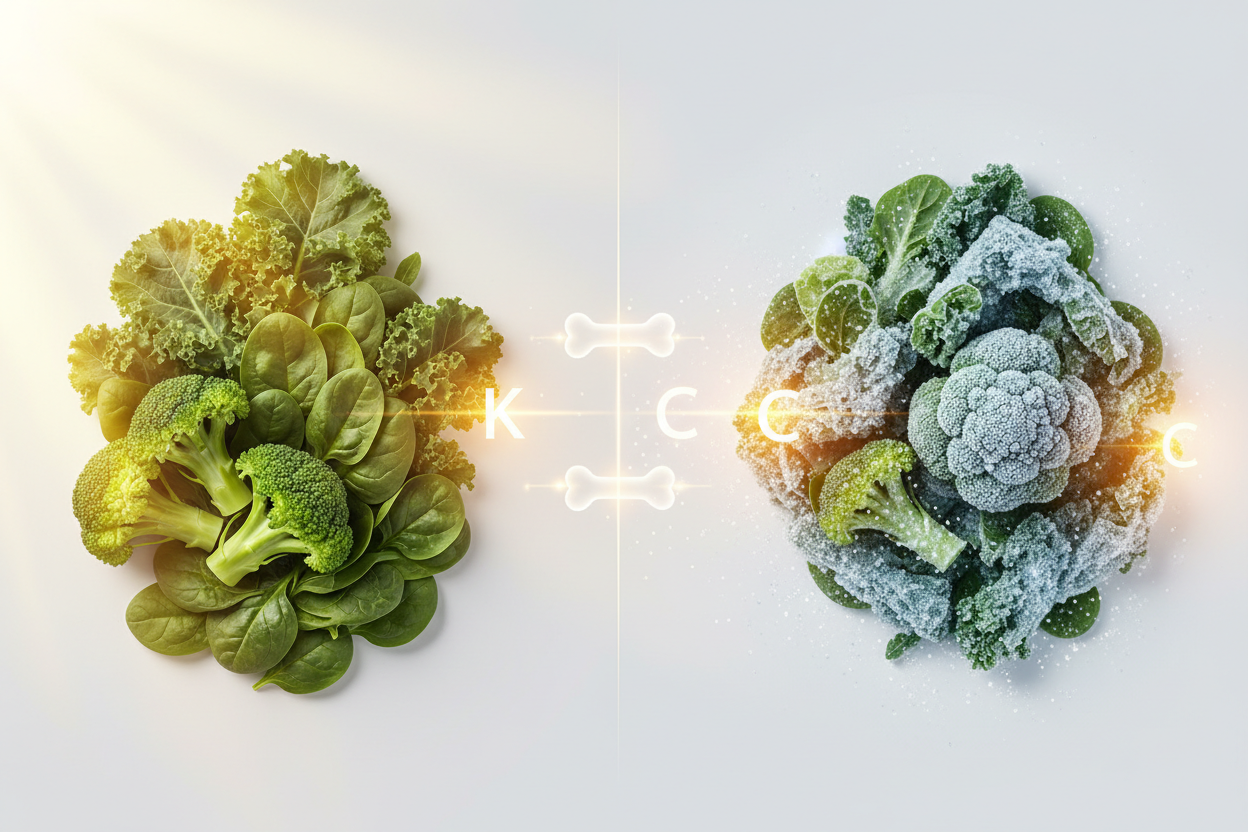
A: Frozen vegetables can be just as nutritious as fresh ones, sometimes even more so. Vegetables are typically frozen at peak ripeness when nutrient levels are highest. For bone health nutrients like vitamin K, vitamin C, and minerals, frozen vegetables retain most of their nutritional value. Choose frozen vegetables without added sauces or sodium for the best nutritional profile.
Q: How much of these vegetables should I eat daily to support bone health?
A: The general recommendation is to consume 2-3 cups of vegetables daily, with an emphasis on variety and including dark leafy greens several times per week. For bone health specifically, aim to include at least one serving of dark leafy greens daily, along with other colorful vegetables that provide vitamin C, potassium, and other bone-supporting nutrients.
Q: Do cooking methods affect the bone health benefits of vegetables?
A: Different cooking methods can affect nutrient availability. For example, lightly steaming or sautéing greens can actually improve calcium absorption compared to eating them raw. However, vitamin C is heat-sensitive, so some raw vegetables in your diet are beneficial. The key is variety in both vegetable choices and preparation methods.
Q: Can eating too many vegetables ever be harmful to bone health?
A: In general, it’s difficult to eat too many vegetables. However, some vegetables like spinach are high in oxalates, which can interfere with calcium absorption when consumed in very large quantities. The solution is variety – rotate between different types of leafy greens and vegetables rather than eating the same ones every day.
Q: Are there any vegetables I should avoid for bone health?
A: There are no vegetables you need to completely avoid for bone health. However, if you have a history of kidney stones, you may want to moderate your intake of high-oxalate vegetables like spinach and Swiss chard. For most people, the benefits of eating a variety of vegetables far outweigh any potential concerns.