The Role of Seasonal Eating in Women’s Hormonal Health: A Natural Approach to Balance
Table of Contents
1. Introduction: Why Seasonal Eating Matters for Women’s Health
2. Understanding the Connection Between Food and Female Hormones
3. Spring Eating: Supporting Detoxification and Renewal
4. Summer Nutrition: Cooling Foods for Hormonal Balance
5. Fall Foods: Preparing Your Body for Hormonal Transitions
6. Winter Wellness: Warming Foods for Reproductive Health
7. Practical Tips for Implementing Seasonal Eating
8. Common Mistakes to Avoid in Seasonal Nutrition
9. Conclusion: Embracing Nature’s Rhythm for Better Health
10. Frequently Asked Questions
Introduction: Why Seasonal Eating Matters for Women’s Health
Have you ever noticed how your cravings change with the seasons? Maybe you find yourself reaching for hearty soups in winter or fresh salads in summer. This isn’t just coincidence – it’s your body’s natural wisdom at work. For women especially, aligning our eating patterns with seasonal rhythms can be a game-changer for hormonal health.
Our ancestors understood something we’re just rediscovering: eating seasonally isn’t just about enjoying the freshest produce. It’s about supporting our body’s complex hormonal systems through the natural ebb and flow of the year. When we eat in harmony with the seasons, we’re essentially giving our endocrine system the nutrients it needs, precisely when it needs them most.
Women’s hormonal health is incredibly intricate, involving a delicate dance between estrogen, progesterone, cortisol, insulin, and thyroid hormones. These hormones don’t operate in isolation – they’re constantly responding to our environment, stress levels, sleep patterns, and yes, what we eat. Seasonal eating offers a natural framework for supporting this complex system throughout the year.
Understanding the Connection Between Food and Female Hormones
Before diving into seasonal specifics, it’s crucial to understand how deeply interconnected our food choices and hormonal health truly are. Every meal we eat sends signals throughout our body, influencing everything from blood sugar levels to mood regulation.
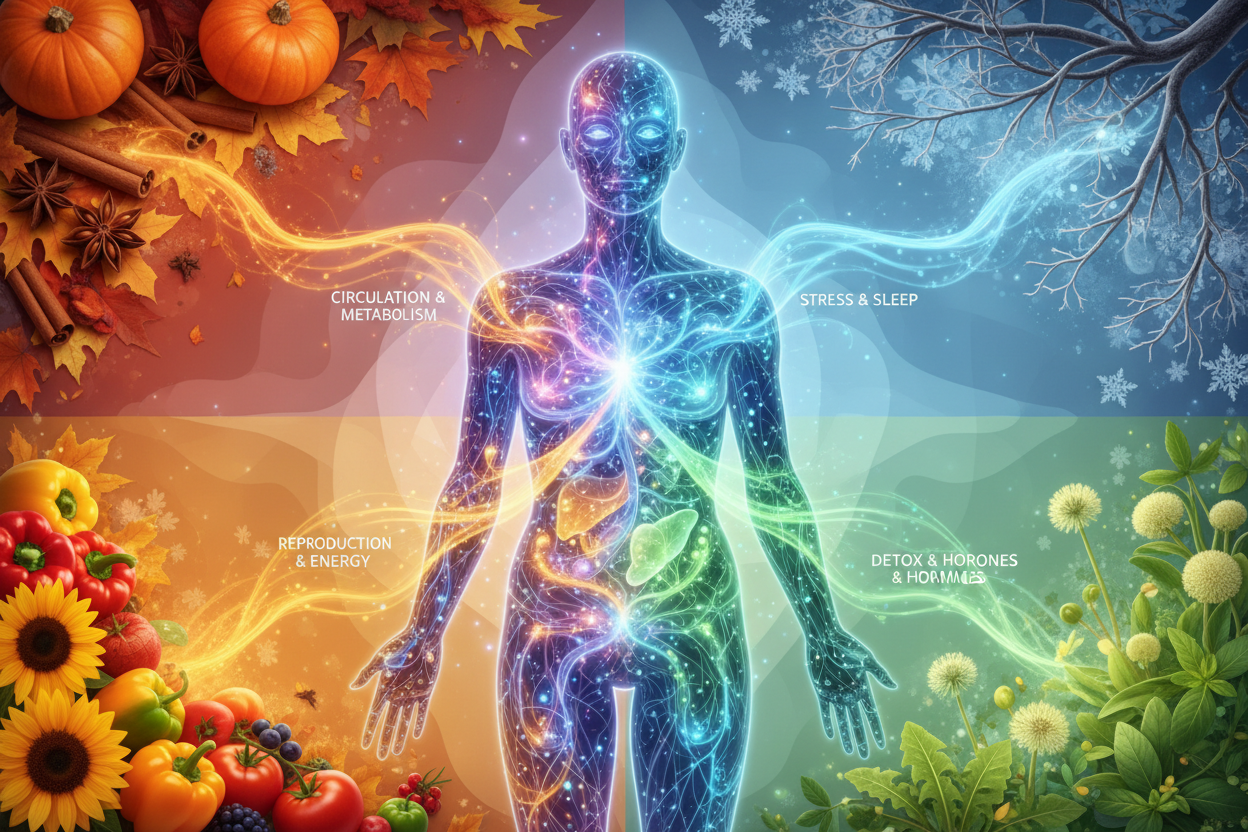
Think of your hormones as a sophisticated communication network. When you eat foods that are in season, you’re providing your body with nutrients that naturally support the physiological changes happening during that time of year. For instance, the warming spices abundant in fall harvests help support circulation and metabolism as temperatures drop, while spring’s bitter greens naturally support the liver’s detoxification processes after a long winter.
Women’s bodies are particularly sensitive to these nutritional signals because our reproductive hormones are constantly fluctuating – not just monthly with our menstrual cycles, but also seasonally. Research shows that women’s hormone levels, fertility rates, and even mood can vary significantly throughout the year, often correlating with seasonal light exposure and food availability.
Spring Eating: Supporting Detoxification and Renewal
Spring represents renewal and cleansing, making it the perfect time to support your body’s natural detoxification processes. After months of heavier winter foods, your liver is ready for some gentle support, and spring’s bounty delivers exactly what you need.
The bitter greens that emerge in spring – dandelion, arugula, watercress, and early lettuce – aren’t just coincidentally available now. These foods naturally stimulate bile production and liver function, helping your body process and eliminate excess hormones, particularly estrogen. This is especially important for women dealing with estrogen dominance, a common hormonal imbalance that can cause irregular periods, mood swings, and weight gain.
Spring is also when your body naturally wants to shed the protective layer of winter weight. Supporting this process with lighter, cleansing foods helps regulate insulin sensitivity and supports healthy weight management. Asparagus, artichokes, and fresh herbs like parsley and cilantro are natural diuretics that help reduce bloating and support kidney function.
Consider incorporating fermented foods during spring as well. Your gut health directly impacts hormone production and regulation, and the fresh start of spring is an ideal time to reset your digestive system with foods like sauerkraut, kimchi, and kefir.
Summer Nutrition: Cooling Foods for Hormonal Balance
Summer’s abundance of fresh fruits and vegetables isn’t just nature showing off – it’s providing exactly what our bodies need during the warmest months. The high water content in summer produce helps maintain hydration, which is crucial for hormone transport and cellular communication.
Berries, stone fruits, and melons are packed with antioxidants that help combat the oxidative stress that can disrupt hormone production. The natural sugars in these fruits provide quick energy without the dramatic blood sugar spikes that can throw insulin and cortisol levels out of balance.
Summer vegetables like cucumbers, zucchini, and tomatoes have cooling properties that help regulate body temperature naturally. This is particularly beneficial for women experiencing hot flashes or those whose hormonal fluctuations make them more sensitive to heat.
The longer daylight hours of summer naturally boost serotonin production, often improving mood and energy levels. Supporting this with foods rich in tryptophan – like fresh fish, seeds, and nuts – can help maintain stable mood throughout the season.
Fall Foods: Preparing Your Body for Hormonal Transitions
As daylight hours decrease and temperatures drop, our bodies naturally begin preparing for winter. This transition period is crucial for hormonal health, and fall’s harvest provides exactly what we need to support these changes.
Root vegetables like sweet potatoes, carrots, and beets are rich in beta-carotene, which supports progesterone production. Progesterone is often called the “calming hormone” because it helps balance estrogen and supports restful sleep – something that becomes increasingly important as we head into darker months.
The warming spices that pair perfectly with fall foods – cinnamon, ginger, nutmeg, and cloves – do more than add flavor. These spices help regulate blood sugar, support circulation, and provide warming energy that helps maintain metabolic function as activity levels naturally decrease.
Fall is also when many women notice changes in their energy levels and mood. The complex carbohydrates found in winter squashes and whole grains help maintain stable blood sugar levels, supporting consistent energy and mood throughout the day.
Winter Wellness: Warming Foods for Reproductive Health
Winter eating is all about nourishment and warmth. During the coldest months, our bodies need more calories and warming foods to maintain energy and support reproductive health. This isn’t the time for restrictive dieting – it’s the time for nourishing your body deeply.
Bone broth, slow-cooked stews, and warming teas provide the minerals and amino acids necessary for hormone production. The glycine found in bone broth supports liver detoxification, while the minerals help maintain healthy thyroid function – crucial for regulating metabolism and energy levels during darker months.
Healthy fats become even more important in winter. Avocados, nuts, seeds, and fatty fish provide the building blocks for hormone production while supporting brain health and mood stability. Many women find that increasing their healthy fat intake during winter helps reduce PMS symptoms and supports more regular cycles.
Winter is also when many women experience seasonal affective disorder (SAD) or general mood changes. Foods rich in vitamin D, omega-3 fatty acids, and B vitamins can help support mental health during these challenging months.
Practical Tips for Implementing Seasonal Eating
Making the transition to seasonal eating doesn’t have to be overwhelming. Start small and gradually incorporate more seasonal awareness into your meal planning.
Begin by visiting local farmers’ markets or joining a community-supported agriculture (CSA) program. This naturally exposes you to what’s in season and often provides the freshest, most nutrient-dense options. When you’re shopping for produce that’s truly in season, you’ll often find it tastes better and costs less.
Keep a simple seasonal eating guide handy. You don’t need to memorize everything at once, but having a reference can help you make better choices when grocery shopping or meal planning. Focus on incorporating one or two new seasonal foods each week rather than overhauling your entire diet overnight.
Listen to your body’s natural cravings. Often, what we crave seasonally aligns with what our bodies actually need. If you’re craving warming soups in winter or fresh salads in summer, honor those instincts while making nutritious choices within those categories.
Common Mistakes to Avoid in Seasonal Nutrition
While seasonal eating is generally beneficial, there are some common pitfalls to avoid. Don’t become so rigid about seasonal eating that you stress about every food choice. Stress itself can disrupt hormonal balance, so maintain flexibility and focus on overall patterns rather than perfection.
Avoid extreme seasonal restrictions, especially if you have specific nutritional needs or health conditions. Seasonal eating should enhance your nutrition, not limit it unnecessarily. If you need certain foods year-round for health reasons, prioritize your wellbeing over strict seasonal guidelines.
Don’t ignore your individual needs in favor of general seasonal recommendations. Every woman’s hormonal profile is unique, and what works for others might not work for you. Pay attention to how different foods make you feel and adjust accordingly.
Conclusion: Embracing Nature’s Rhythm for Better Health
Seasonal eating offers a beautiful framework for supporting women’s hormonal health naturally. By aligning our food choices with nature’s rhythms, we can provide our bodies with the specific nutrients needed to support hormonal balance throughout the year.
Remember, this isn’t about perfection – it’s about creating a sustainable relationship with food that honors both your body’s needs and the natural world around you. Start where you are, make gradual changes, and pay attention to how seasonal eating affects your energy, mood, and overall wellbeing.
Your hormones will thank you for this gentle, natural approach to nutrition. As you begin to eat more seasonally, you might find that your body naturally craves what it needs when it needs it, creating a harmonious cycle of nourishment that supports optimal health year-round.
Frequently Asked Questions
Q: Can seasonal eating help with irregular periods?
A: Seasonal eating can support overall hormonal balance, which may help regulate menstrual cycles. However, irregular periods can have many causes, so it’s important to work with a healthcare provider for persistent issues while using seasonal eating as supportive nutrition.
Q: Is it expensive to eat seasonally?
A: Eating seasonally can actually be more economical since in-season produce is typically less expensive and more readily available. Shopping at farmers’ markets, joining CSAs, or growing some of your own food can make seasonal eating even more affordable.
Q: What if I live in a climate with limited seasonal variety?
A: You can still practice seasonal eating by focusing on foods that store well and are naturally available during different times of year, even if they’re not locally grown. The key is understanding the energetic qualities of foods (cooling vs. warming) and how they support your body’s needs throughout the year.
Q: How long does it take to see benefits from seasonal eating?
A: Some people notice improvements in energy and digestion within a few weeks, while hormonal changes may take 2-3 months to become apparent. Consistency is key, and the benefits often build gradually over time.
Q: Can I still eat my favorite foods if they’re not in season?
A: Absolutely! Seasonal eating is about creating a foundation of seasonal foods while still enjoying variety and foods you love. The goal is to incorporate more seasonal awareness into your eating patterns, not to restrict yourself completely.