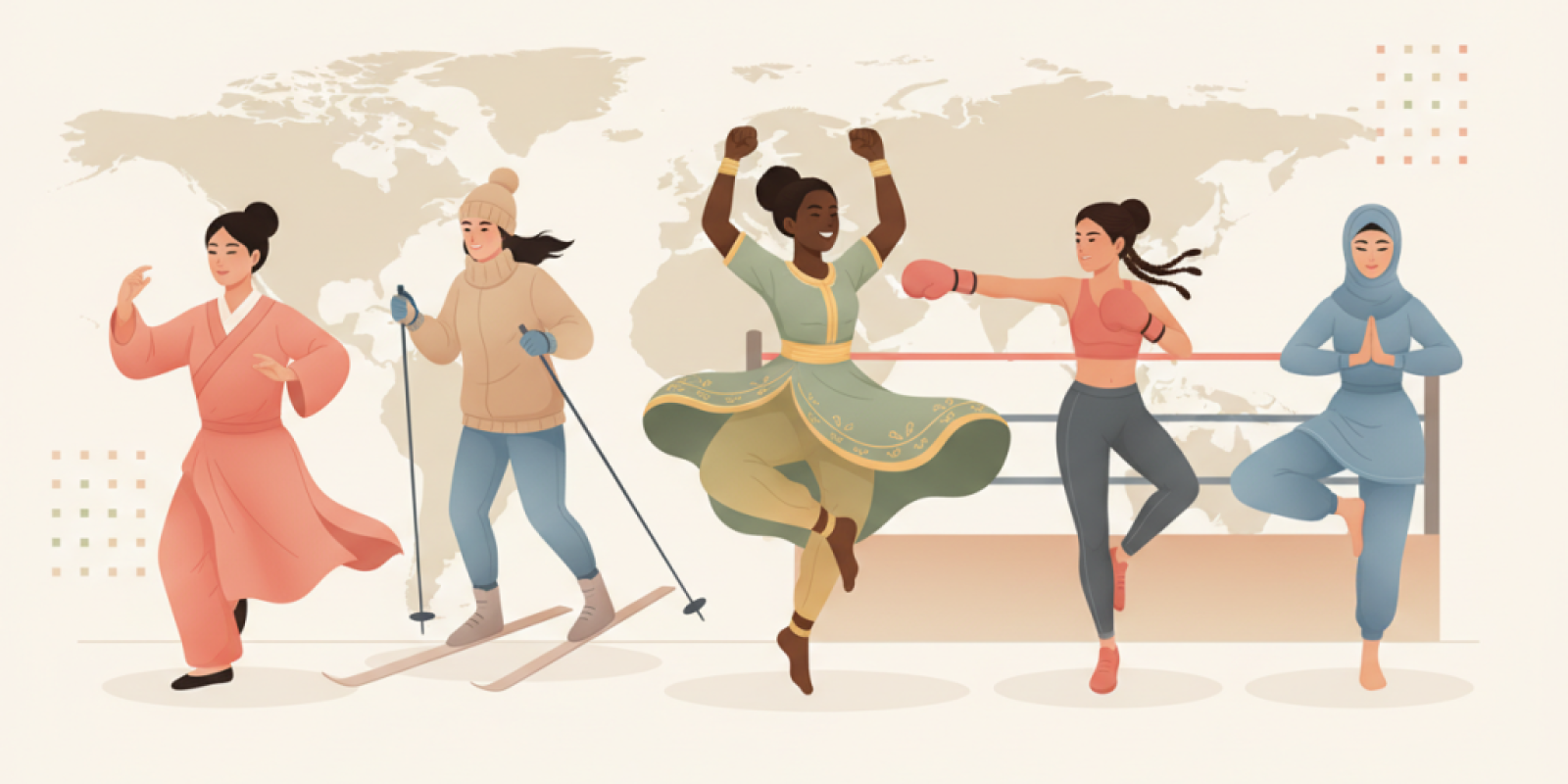
How Different Countries Approach Women’s Fitness Culture: A Global Perspective
Table of Contents
1. Introduction: The Global Landscape of Women’s Fitness
2. Nordic Excellence: Scandinavia’s Holistic Approach
3. Ancient Wisdom Meets Modern Fitness: Asia’s Unique Blend
4. Mediterranean Balance: Southern Europe’s Lifestyle Integration
5. Latin American Passion: Dance, Community, and Celebration
6. North American Innovation: Technology and Accessibility
7. Middle Eastern Evolution: Breaking Barriers and Building Communities
8. African Heritage: Traditional Movement and Modern Adaptation
9. Cultural Factors Shaping Women’s Fitness Worldwide
10. The Future of Global Women’s Fitness Culture
11. Frequently Asked Questions
Introduction: The Global Landscape of Women’s Fitness
When I first started researching women’s fitness cultures around the world, I expected to find some differences between countries. What I discovered was far more fascinating than I anticipated. The way women approach fitness isn’t just about personal preference or available facilities – it’s deeply woven into the fabric of cultural values, historical traditions, and societal expectations that have evolved over centuries.
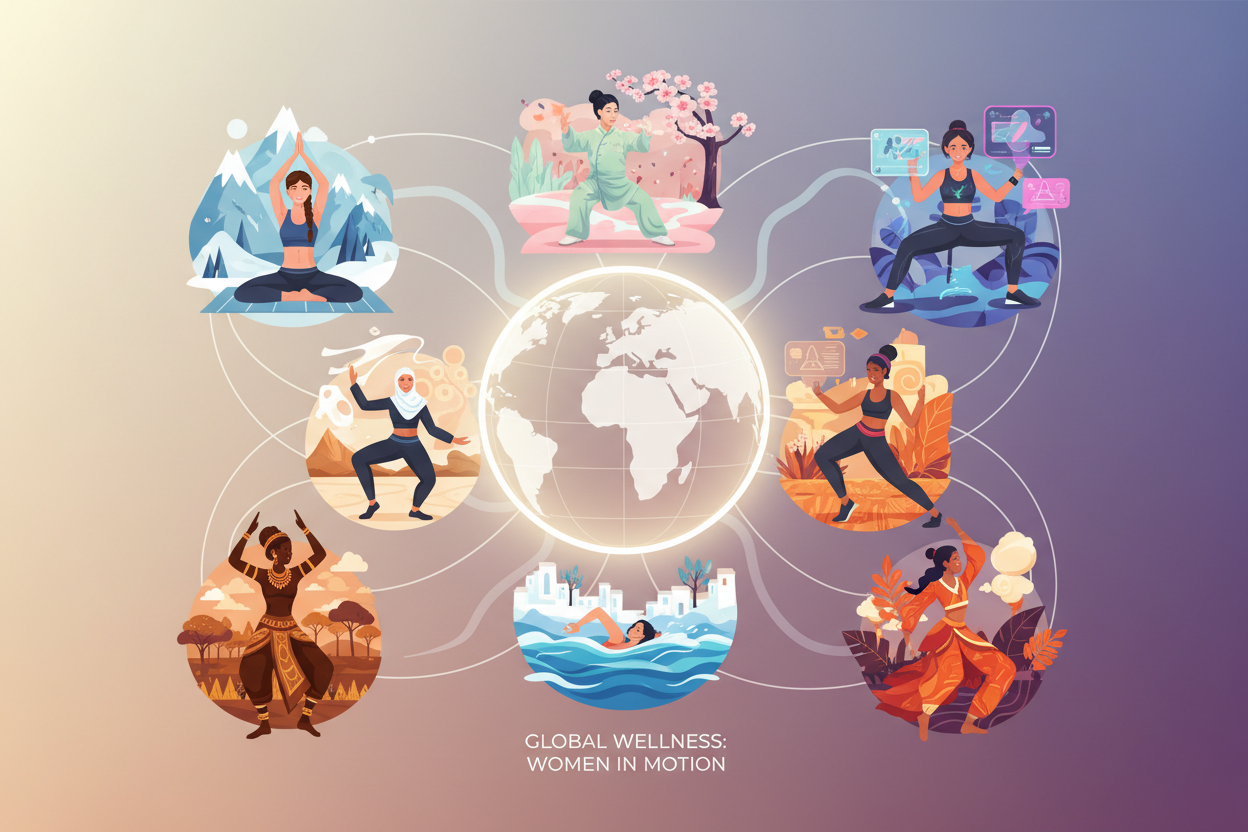
From the sauna culture of Finland to the martial arts traditions of Japan, each country has developed its own unique relationship with women’s physical wellness. These approaches reflect everything from climate and geography to religious beliefs and economic factors. Understanding these diverse perspectives not only broadens our appreciation for global cultures but also offers valuable insights that can enhance our own fitness journeys.
The modern fitness landscape for women has transformed dramatically over the past few decades. What was once limited to basic calisthenics or dance classes has exploded into a rich tapestry of activities, philosophies, and communities that vary significantly from one corner of the globe to another.
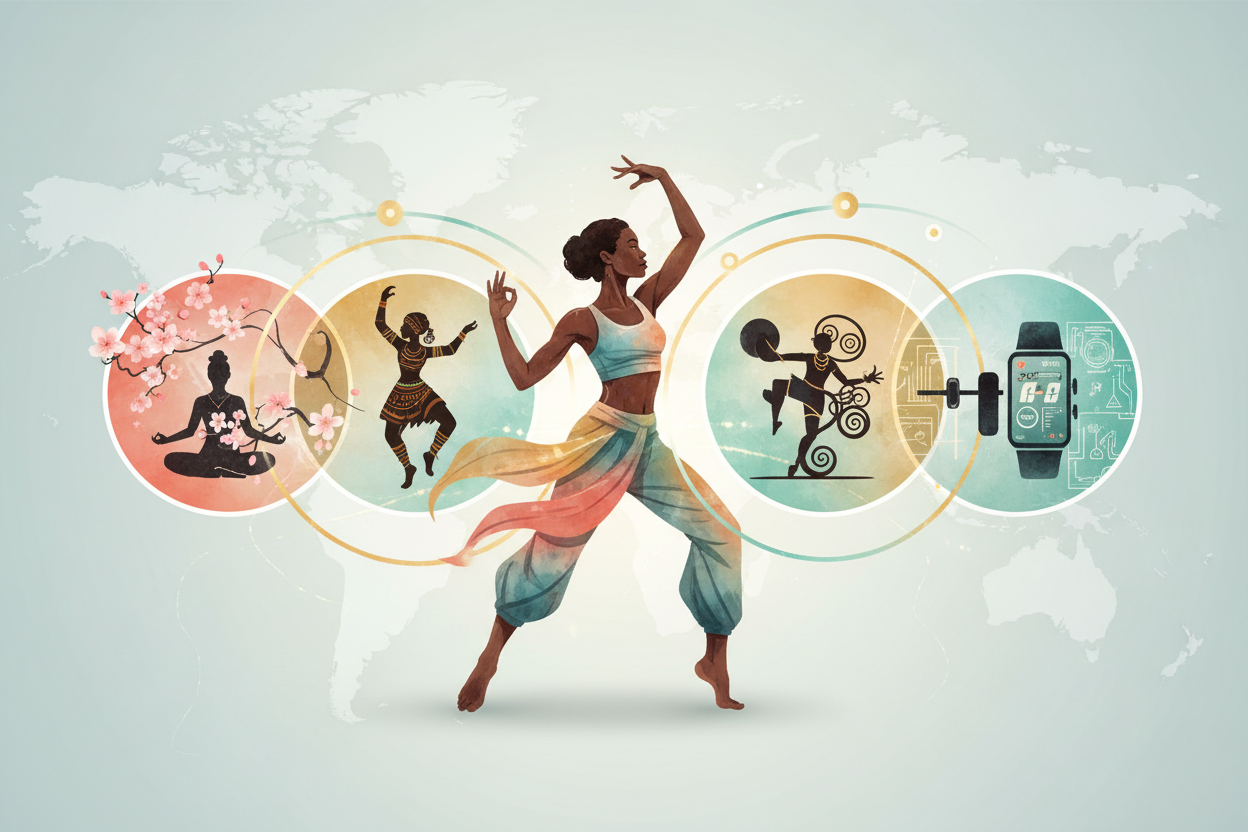
Nordic Excellence: Scandinavia’s Holistic Approach
Scandinavian countries consistently rank among the happiest and healthiest in the world, and their approach to women’s fitness plays a significant role in this achievement. In Sweden, Norway, Denmark, and Finland, fitness culture is built around the concept of “lagom” – a Swedish word meaning “just the right amount” or balance.
Swedish women embrace outdoor activities year-round, with cross-country skiing being as popular in winter as hiking is in summer. The concept of “allemansrätten” or “right to roam” means that nature is accessible to everyone, creating a culture where outdoor fitness is both free and encouraged. Many Swedish women I’ve spoken with describe their fitness routine as seamlessly integrated into daily life rather than a separate obligation.
Finland’s sauna culture deserves special mention in women’s fitness traditions. Finnish women use saunas not just for relaxation but as an integral part of their wellness routine. The heat therapy, followed by cold plunges or snow rolling, is believed to boost circulation, reduce stress, and strengthen the immune system. This practice has been passed down through generations and remains a cornerstone of Finnish women’s health culture.
Norwegian women have pioneered the concept of “friluftsliv” – outdoor life – which emphasizes spending time in nature regardless of weather conditions. This philosophy has created a generation of women who see physical activity as a natural part of existence rather than a chore to be completed indoors.
Ancient Wisdom Meets Modern Fitness: Asia’s Unique Blend
Asian countries present perhaps the most diverse and culturally rich approaches to women’s fitness, blending thousands of years of traditional practices with cutting-edge modern techniques. The integration of mind, body, and spirit remains central to many Asian fitness philosophies.
In China, traditional practices like Tai Chi and Qigong remain incredibly popular among women of all ages. Early morning gatherings in parks across major cities showcase groups of women moving through flowing sequences that improve balance, flexibility, and mental clarity. These practices emphasize internal energy cultivation rather than external muscle building, reflecting a holistic view of health that prioritizes longevity and harmony.
Japanese women have embraced both traditional and modern fitness approaches with characteristic precision and dedication. The concept of “ikigai” – life’s purpose – often incorporates physical wellness as a fundamental component. Radio Taiso, a daily broadcast exercise program that has run since 1928, still draws millions of participants, including many women who gather in parks and workplaces for synchronized morning exercises.
South Korea has revolutionized women’s fitness culture through the global phenomenon of K-pop dance workouts and the integration of beauty standards with fitness goals. Korean women often approach fitness with meticulous attention to form and technique, influenced by the cultural emphasis on precision and excellence.
India’s contribution to global women’s fitness culture through yoga cannot be overstated. While yoga has ancient roots in spiritual practice, modern Indian women have adapted these traditions to create accessible fitness routines that address both physical and mental health needs.
Mediterranean Balance: Southern Europe’s Lifestyle Integration
The Mediterranean approach to women’s fitness embodies the region’s famous lifestyle philosophy – everything in moderation, with an emphasis on enjoyment and social connection. Rather than viewing fitness as a separate activity, Mediterranean cultures integrate physical movement into daily life in ways that feel natural and sustainable.
Italian women often incorporate walking into their daily routines in ways that would impress any fitness tracker. The tradition of the evening “passeggiata” – a leisurely social walk – serves multiple purposes: physical activity, social connection, and community engagement. Many Italian cities are designed to encourage walking, with pedestrian-friendly centers and beautiful routes that make movement a pleasure rather than a necessity.
Spanish women have embraced group fitness activities that emphasize fun and community. Flamenco dancing, aqua aerobics in coastal areas, and group hiking in mountainous regions reflect the Spanish preference for fitness activities that bring people together. The concept of “sobremesa” – lingering after meals for conversation – extends to post-workout socializing, making fitness a social experience.
Greek women often combine fitness with cultural traditions, participating in folk dancing groups that provide both physical activity and cultural preservation. The Greek emphasis on “philoxenia” – love of strangers – creates welcoming fitness communities where women support each other’s health journeys.
Latin American Passion: Dance, Community, and Celebration
Latin American countries have given the world some of the most joyful and energetic approaches to women’s fitness. The integration of music, dance, and community celebration creates fitness cultures that feel more like parties than workouts.
Brazilian women have influenced global fitness culture through their embrace of beach volleyball, capoeira, and dance-based workouts. The Brazilian concept of “saudade” – a deep emotional connection to joy and beauty – infuses their approach to physical activity. Beach culture in cities like Rio de Janeiro has created a fitness environment where outdoor activities are accessible and celebrated.
Colombian women have contributed significantly to the global popularity of dance fitness through rhythms like salsa, cumbia, and reggaeton. The Colombian approach to fitness emphasizes expression, creativity, and emotional release through movement. Many Colombian women describe their fitness routines as essential for mental health and stress relief.
Mexican women often combine traditional indigenous practices with modern fitness approaches. Ancient Aztec and Mayan movement traditions have been adapted into contemporary fitness routines, while the strong family and community orientation means that fitness activities often involve multiple generations.
North American Innovation: Technology and Accessibility
North American countries, particularly the United States and Canada, have pioneered many innovations in women’s fitness culture, from the aerobics boom of the 1980s to today’s high-tech fitness solutions and inclusive movement toward body positivity.
American women’s fitness culture has evolved from a focus on appearance-based goals to a more holistic approach that emphasizes strength, mental health, and personal empowerment. The rise of female-founded fitness brands and the body positivity movement has created more inclusive spaces where women of all sizes, ages, and abilities can find their place in fitness culture.
Canadian women have embraced outdoor fitness year-round, with activities like snowshoeing, ice skating, and winter hiking becoming integral parts of fitness culture. The Canadian emphasis on multiculturalism has created diverse fitness communities that blend traditions from around the world.
The integration of technology in North American fitness culture has made exercise more accessible and personalized. From fitness apps and wearable devices to virtual reality workouts, technology has democratized access to fitness instruction and community support.
Middle Eastern Evolution: Breaking Barriers and Building Communities
Middle Eastern countries present complex and evolving approaches to women’s fitness culture, where traditional values intersect with modern aspirations in fascinating ways. The region is experiencing significant changes in how women approach physical wellness and community building through fitness.
In the United Arab Emirates, particularly Dubai and Abu Dhabi, women’s fitness culture has exploded with luxury facilities, international instructors, and innovative programs designed specifically for women. The development of women-only fitness spaces has created opportunities for participation while respecting cultural preferences for privacy and modesty.
Lebanese women have long embraced fitness culture, with Beirut serving as a regional hub for innovative fitness trends. The Lebanese approach often emphasizes social aspects of fitness, with group classes and fitness communities providing important social connections.
Israeli women have developed a fitness culture that emphasizes practical strength and mental resilience, influenced by the country’s emphasis on preparedness and community service. Military service requirements have contributed to a culture where physical fitness is viewed as both personal and civic responsibility.
African Heritage: Traditional Movement and Modern Adaptation
African countries offer rich traditions of movement and dance that are being rediscovered and adapted into modern fitness practices. The integration of traditional African movement with contemporary fitness approaches creates unique and culturally meaningful exercise experiences.
South African women have embraced both traditional dance forms and modern fitness innovations. The post-apartheid era has seen increased access to fitness facilities and programs, with many women participating in activities that celebrate African heritage while promoting physical health.
Nigerian women have contributed to global fitness culture through Afrobeats dance workouts and traditional movement practices. The Nigerian emphasis on community and celebration infuses fitness activities with joy and cultural pride.
Kenyan women, particularly in running communities, have shown the world the power of group training and mutual support. The Kenyan approach to distance running emphasizes patience, consistency, and community support – principles that extend beyond running to other fitness activities.
Cultural Factors Shaping Women’s Fitness Worldwide
Several key cultural factors consistently influence how different countries approach women’s fitness culture. Understanding these factors helps explain why certain activities thrive in some regions while remaining less popular in others.
Religious and cultural modesty requirements have led to innovative solutions in many countries, including women-only fitness spaces, modest athletic wear designed for performance, and adapted activities that accommodate cultural preferences while promoting physical health.
Climate and geography play crucial roles in shaping fitness cultures. Countries with harsh winters have developed indoor fitness traditions and seasonal activity cycles, while tropical countries often emphasize outdoor activities and water-based exercises.
Economic factors significantly impact access to fitness facilities and equipment. Countries with higher economic development often have more diverse fitness options, while others have developed creative, low-cost approaches that maximize community resources.
Historical gender roles continue to influence women’s fitness culture, though these are evolving rapidly in many countries. Nations that have traditionally encouraged women’s participation in sports and physical activity often have more developed fitness cultures for women.
The Future of Global Women’s Fitness Culture
The future of women’s fitness culture appears to be heading toward increased globalization while maintaining cultural uniqueness. Social media and digital platforms are creating opportunities for women worldwide to share fitness practices and learn from each other’s traditions.
Emerging trends include the integration of mental health and mindfulness practices into fitness routines, increased emphasis on functional movement that supports daily life activities, and growing recognition of fitness as a tool for social change and community building.
The COVID-19 pandemic accelerated many changes in women’s fitness culture, including the adoption of home-based workouts, virtual fitness communities, and outdoor activities. These changes have made fitness more accessible to women who previously faced barriers to participation.
Climate change is also influencing fitness cultures, with many countries adapting traditional outdoor activities to changing weather patterns and developing more sustainable approaches to fitness facility operation and equipment manufacturing.
As we look toward the future, the most successful approaches to women’s fitness culture will likely be those that honor cultural traditions while embracing innovation, prioritize inclusivity and accessibility, and recognize fitness as an integral part of overall wellness rather than an isolated activity.
Conclusion
The diversity of women’s fitness cultures around the world offers valuable lessons for anyone interested in developing a sustainable and enjoyable relationship with physical activity. From Scandinavia’s balanced outdoor approach to Latin America’s joyful dance traditions, each culture contributes unique perspectives on how movement can enhance women’s lives.
What strikes me most about this global exploration is how fitness culture reflects broader societal values and how women in every culture have found ways to prioritize their physical wellness within their specific contexts. Whether it’s through traditional practices passed down through generations or innovative modern approaches, women worldwide are creating fitness cultures that serve their needs and honor their values.
As our world becomes increasingly connected, we have unprecedented opportunities to learn from each other’s approaches to women’s fitness. By understanding and appreciating these diverse perspectives, we can create more inclusive, effective, and enjoyable fitness experiences that honor the rich tapestry of global women’s experiences.
The future of women’s fitness culture lies not in adopting a single “best” approach, but in creating personalized practices that draw inspiration from the wisdom and innovation found in cultures around the world. Whether you’re drawn to the mindful movement of Asian traditions, the community focus of African dance, or the technological innovations of North America, there’s something to learn from every culture’s approach to women’s fitness.
Frequently Asked Questions
Which country has the most advanced women’s fitness culture?
There’s no single “most advanced” country, as different nations excel in different aspects. Scandinavian countries lead in outdoor fitness integration and work-life balance, while countries like the US and Canada pioneer technological innovations. Asian countries excel in mind-body integration, and Latin American countries lead in community-based, joyful approaches to fitness.
How do cultural and religious factors affect women’s fitness participation globally?
Cultural and religious factors significantly influence women’s fitness participation through modesty requirements, gender segregation preferences, and family obligations. However, many countries have developed innovative solutions like women-only facilities, modest athletic wear, and family-friendly fitness programs to accommodate these factors while promoting women’s health.
What are the most popular fitness activities for women worldwide?
Walking and dance-based activities are universally popular across cultures. Yoga and stretching exercises have gained global acceptance, while swimming, group fitness classes, and outdoor activities like hiking vary in popularity based on climate, infrastructure, and cultural preferences.
How has globalization affected traditional women’s fitness practices?
Globalization has created opportunities for cultural exchange in fitness practices, leading to the worldwide popularity of yoga, martial arts, and dance fitness. However, many countries are also experiencing a renewed interest in preserving and adapting traditional movement practices for modern fitness needs.
What role does government policy play in women’s fitness culture?
Government policies significantly impact women’s fitness culture through public facility provision, school physical education requirements, healthcare system integration, and workplace wellness programs. Countries with supportive policies tend to have higher rates of women’s fitness participation and better health outcomes.
How do economic factors influence women’s access to fitness opportunities?
Economic factors affect access to fitness facilities, equipment, and instruction. However, many cultures have developed low-cost or free alternatives like community-based programs, outdoor activities, and traditional practices that don’t require expensive equipment or facilities.